ChatGPT arrived at the end of 2022. By 2023 almost everyone had tried it. Now it’s 2026 and a surprising number of us are still talking to it the same messy way we did on day one.
We type vague wishes, hope for the best, and then wonder why the answers come back sideways. This is just a friendly refresher for those of us who never quite broke the old habits.
I used to think these AI chat things were simple. You type what you want, it gives it to you. Easy.
Then I tried it, and it felt exactly like living with a golden retriever that somehow went to university. Full of energy, desperate to help, and completely ready to bring you the wrong thing with a big happy face.
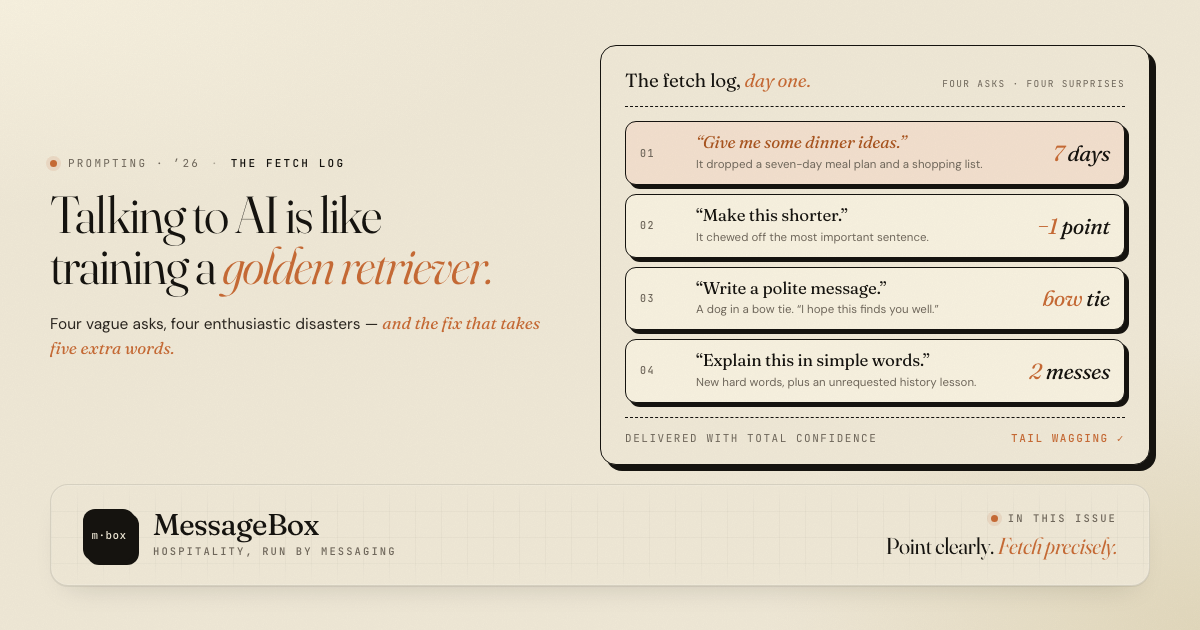
One night I was hungry and typed, “Give me some dinner ideas.”
The AI wagged its digital tail and dropped a full seven-day meal plan at my feet, shopping list and all. I only wanted three quick ideas because the fridge was nearly empty. I closed the laptop and ate toast. The retriever looked proud. I looked tired.
Next try. I pasted a long note and said, “Make this shorter.”
It shortened it all right — by chewing off the most important sentence. What came back was neat and completely useless. Classic golden retriever move: you ask for the slipper, it brings the whole shoe rack and expects praise.
Then I needed a quick email. “Write a polite message asking for a meeting next week.”
What I got sounded like it was written by a dog wearing a bow tie and reading old books. Full of “I hope this finds you well” and “looking forward to the pleasure of your company.” My real message was supposed to sound like a normal person. I deleted it faster than a retriever drops a stolen sock when you say “leave it.”
Last one. I pasted a confusing work paragraph and asked, “Explain this in simple words.”
The AI explained it with new hard words and then threw in a long history lesson I never asked for. Now I had two messes instead of one. It sat there, tail wagging, waiting for a treat.
That was the moment I laughed. So I changed how I talked to it. I started giving clear, short commands the same way you train a retriever.
“Give me three easy dinner ideas with things I probably already have. One sentence each.”
Perfect. Three simple ideas, no extra fluff.
“Make this half as long. Keep the main point. Don’t drop anything important.”
Done. Short and useful.
“Write a short, friendly email asking to meet next week. Sound like a normal person, not a robot.”
Finally — an email that sounded like me.
The funny part is how well it works once you treat the AI like the over-excited dog it secretly is. You don’t shout. You don’t get fancy. You just point clearly at what you want and say it in plain words.
Now we get along fine. It still tries to overdo things now and then, the way a retriever still tries to sit on your lap even though it weighs as much as a small sofa. But a quick clear instruction and everything settles down.
So if your AI keeps bringing you the whole garden when you only asked for a stick, don’t get mad.
Smile, give better directions, and remember — you’re not arguing with a machine.
You’re just training a very good dog who really, really wants to please you.
You’re training a very good dog who really wants to please you.