The hospitality industry has found its next gold rush, and it involves sleeping in the woods.
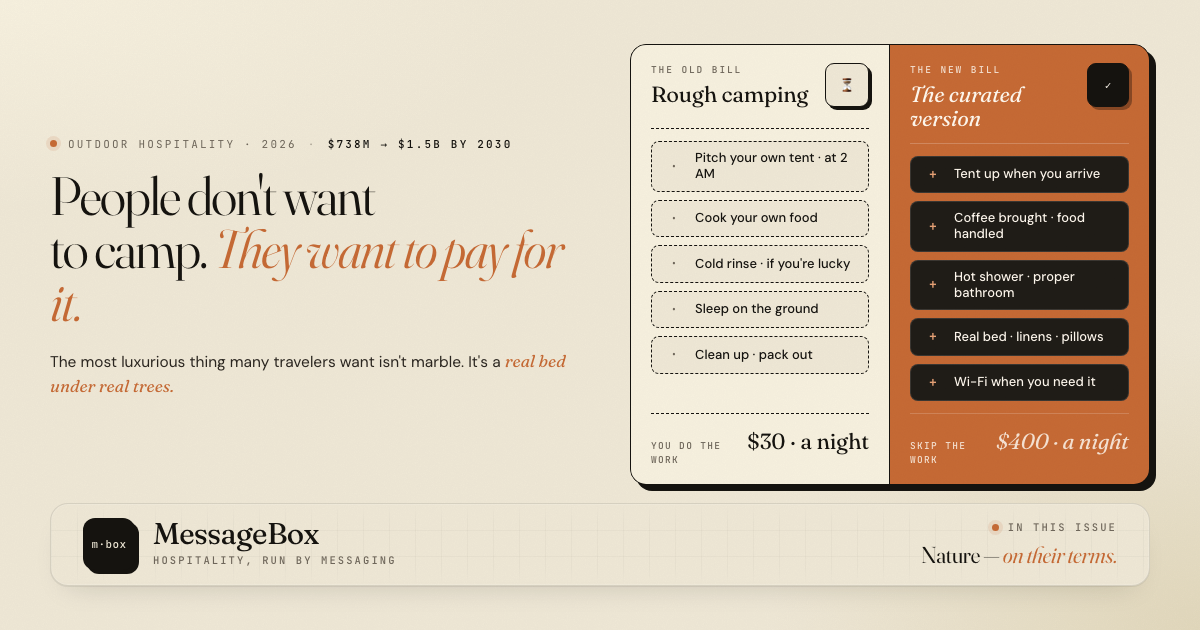
Not rough camping. Not pitching your own tent at 2 AM while fighting mosquitoes. We're talking glamping and outdoor hospitality done properly: real beds, hot showers, proper bathrooms, and someone bringing you coffee while you stare at actual trees.
The biggest players have decided this isn't a niche any more. It's a category. Marriott launched an entire Outdoor Collection built around Postcard Cabins and Trailborn. Hilton partnered with AutoCamp and folded it into its loyalty ecosystem. WorldHotels rolled out Backdrop, a dedicated glamping brand with riverside cabins and safari-style tents. Hyatt got in through Under Canvas. The same companies that spent years perfecting marble bathrooms in cities are now racing to pitch better tents near national parks.
The numbers explain why. Hilton's 2026 Trends Report found 37% of global travellers now list "time in nature" as one of their top reasons for taking a trip. The U.S. glamping sector has gone from roughly $738 million in 2024 and is projected to cross $1.5 billion by 2030 — with travellers aged 18–32 already accounting for nearly 44% of revenue. This isn't a pandemic blip. It's structural.
That's the real insight, and it's worth sitting with. They like the photos. They like the feeling of disconnecting — as long as the bed is comfortable, the Wi-Fi works when they need it, and they don't have to cook or clean.
Traditional camping asks you to do the work. Glamping lets you pay to skip the work while still getting the experience. It's the same logic as buying cold brew instead of making coffee: convenience, aesthetic, and status, now with pine trees instead of city views.
The industry finally understood something important. People don't want to escape civilisation completely. They want a curated version of escape — nature on their terms, comfort on their terms.
What makes the shift significant is that it's no longer just independent operators and quirky camps. Major brands are treating outdoor hospitality as a permanent, scalable category, bringing consistency, loyalty programmes, professional operations, and real capital. And once big chains validate a format, it stops being a trend and becomes infrastructure. More properties open. More locations get developed. More people try it.
Which points at the cheat code hiding in all of this. The most luxurious thing many travellers want right now isn't another infinity pool or marble bathroom. It's a thoughtfully designed tent, a proper bed, and the guarantee that when they wake up they'll see trees instead of another parking lot.
Sometimes progress in hospitality looks like going slightly backward.
Just with much better service.
Just with much better service.