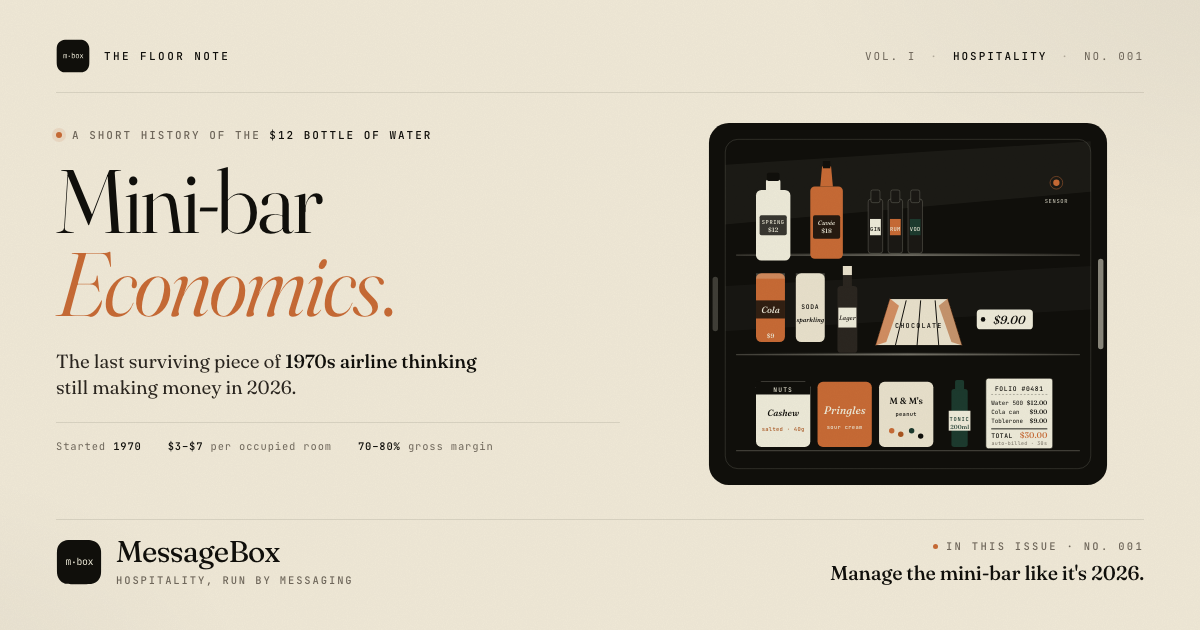
The $12 bottle of water on your nightstand is not a rip-off. It is the last surviving piece of 1970s airline thinking still making money in 2026.
When Conrad Hilton opened the first Hilton in 1919 he noticed something strange: guests who paid $4 for a room would happily spend $1.50 on a newspaper and cigar in the lobby but refused to walk downstairs for a 25-cent Coke. So in 1970 the first hotel mini-bar appeared at the Chicago Hilton. It was a simple honor-system fridge. Theft was rampant. By the late 80s hotels were losing millions.
Then someone ran the numbers. A $4 mini-bar Coke costs the hotel 18 cents. Even with 60% theft the margin was still 400%. The solution was elegant: install a sensor that detects removal and bills you automatically within 30 seconds. No more honor system. Suddenly the mini-bar became one of the highest-margin items in the entire hotel — often 70–80% gross margin versus 30% on the restaurant downstairs.
Today the average hotel makes $3–$7 per occupied room per night from the mini-bar. A single 5-star property with 400 rooms can clear $800,000 a year from items that cost them pennies. The $12 water, the $18 half-bottle of wine, the $9 Toblerone — they are priced not to compete with the 7-Eleven across the street but to extract the exact amount a tired traveler will pay at 11:47 pm without thinking.
The airlines figured this out first with $8 headphones. Hotels just copied the playbook and put it inside your room.
Strip the sensor and the automatic billing and the mini-bar dies the same death the three-martini lunch did in 1994.